Rhino Watercolor: A Designer's Embroidery Review
Some designs land in your inbox and immediately spark a project idea. That was my experience with Rhino Watercolor, an illustration that carries a soft, painterly energy while still feeling grounded enough for real embroidery work. I pulled it up on a Tuesday morning, coffee in hand, and within minutes I was mentally assigning it to a stack of blank canvas totes I had been saving for something special. The watercolor texture gives it a gentle, storybook quality that is not always easy to find in artwork meant for stitched applications.
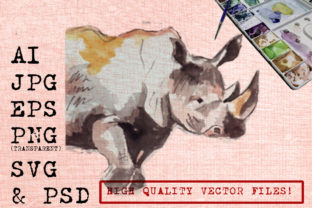
What stood out first was the balance between looseness and structure. The rhino shape reads clearly, even with the fluid watercolor wash, and that is a genuine concern when you are thinking about how something will translate into thread. A design that is too abstract can lose its identity once it hits fabric. This one holds its own. The splashes of pigment and the subtle tonal shifts create a mood that feels both artistic and approachable, which is exactly the kind of vibe that sells well on handmade goods and boutique products.
First Impressions and the Mood It Creates
The watercolor effect in Rhino Watercolor brings a quiet, organic warmth. It does not shout. It settles. I could see it working beautifully on a nursery pillow cover, a child's backpack, or even a lightweight linen apron for someone who loves wildlife art with a softer edge. The rhino itself has a calm presence, and the painterly style softens what could otherwise be a heavy, imposing silhouette. That gentleness is a real asset when you are designing products for gift buyers, parents, or anyone shopping for meaningful, handmade items.
I also appreciated that the composition feels self-contained. There is no awkward cropping or unclear edges. The rhino sits naturally within the frame, and the watercolor bleeds outward in a way that would look intentional on a finished product rather than sloppy. That matters when you are placing a design on a tote bag, a sweatshirt chest, or the front panel of a cap. You want the art to feel complete, not like a fragment that got cut off during hooping.
A Real Project Scenario: The Canvas Tote Test
Let me walk you through how I thought about using Rhino Watercolor in a real project. I have a small batch of natural cotton canvas totes I keep for custom orders. A customer had asked for something artistic but not overly whimsical, an animal design that felt sophisticated enough for an adult but still carried some charm. I pulled up this rhino artwork and started mentally testing it against the fabric weight, the bag dimensions, and the stitch strategy I would use if I were to digitize or adapt it for embroidery.
The watercolor texture immediately raised a practical question: how would the soft edges and tonal variations translate into thread? That is where stitch type selection becomes critical. I could see a combination of fill stitch for the solid body areas and lighter running stitch accents to mimic the watercolor bleeds. A satin stitch border would likely be too rigid for this design. You would want to preserve the airy, hand-painted feel rather than boxing it in with a heavy outline. That decision alone shapes how the finished product looks, how it washes, and how customers perceive the quality.
Where Rhino Watercolor Feels Most at Home
This design leans naturally toward certain product categories. I would place it confidently on tote bags, sweatshirt fronts, pillow covers, nursery wall hangings, tea towels, and lightweight jackets. It also has strong potential for embroidered patches if you reduce the design size carefully and choose a stable backing fabric. The rhino motif is recognizable enough to carry a patch format, and the watercolor effect would make it stand out among the more common bold, graphic patch styles.
For baby clothes and children's apparel, the gentle watercolor look is a natural fit. Parents often gravitate toward designs that feel soft and artistic rather than loud and cartoonish. A small placement on a baby onesie or a toddler t-shirt would read as thoughtful and unique. I would also consider this for personalized gifts, especially if paired with a name or a short word stitched in a complementary thread color below the rhino. The watercolor texture leaves room for that kind of customization without the design feeling cluttered.
When You Need to Pause and Test First
Not every design works everywhere, and Rhino Watercolor deserves a thoughtful approach before you commit it to certain products. The watercolor wash includes subtle color gradations and soft edges. On dark fabrics, those lighter washes could disappear or look muddy if the thread contrast is not dialed in correctly. I always recommend testing on a scrap of the actual fabric you plan to use, especially if you are working with black, navy, or deep charcoal backgrounds.
Small hoop sizes also require caution. The fine details in the watercolor splashes and the rhino's facial features could become dense or illegible if the design is shrunk too aggressively. I would not push this below a four-inch width without first running a stitch-out and checking whether the details hold up. Stretchy fabrics like jersey or performance knits add another layer of complexity. A good cutaway stabilizer becomes essential, and you may need to adjust the stitch density to prevent puckering around the softer watercolor edges.
On curved surfaces like caps, the placement needs extra attention. The rhino's shape is horizontal, and the watercolor spread extends outward unevenly. That can look beautiful on a flat surface but may distort on a structured cap crown. I would test the positioning carefully and consider whether a partial version of the design, cropped intentionally, might work better on that kind of product.
Thread Colors, Texture, and the Handmade Look
One of the smartest moves you can make with Rhino Watercolor is to spend real time on thread color selection. The watercolor original likely includes soft grays, muted blues, and earthy undertones. Translating those into embroidery thread requires an eye for tone. I would pull a range of muted, dusty shades rather than bright, saturated colors. Think slate blue, warm gray, soft charcoal, and maybe a hint of lavender or sage green depending on the fabric base. The goal is to preserve the painterly feel, not to turn it into a flat, solid block of color.
The texture of the finished embroidery will also play a role in how the watercolor effect reads. A smooth, even fill stitch on a stable woven fabric can mimic the soft wash fairly well. On a textured fabric like a slub linen or a looped terry towel, the same stitch might look choppy and lose the fluidity of the original artwork. Fabric choice matters just as much as thread choice, and I would lean toward smooth, tightly woven surfaces for this design to shine.
What Buyers Notice and What Sells
From a business perspective, Rhino Watercolor has qualities that catch a buyer's eye in a crowded market. The watercolor aesthetic is still popular across handmade platforms, and a rhino is less common than the usual deer, bear, or bird motifs. That slight rarity gives it an edge. When a customer scrolls through pages of embroidered sweatshirts or tote bags, a rhino in a soft watercolor finish stands out. It feels curated, not mass-produced.
For Etsy sellers, craft fair vendors, and small shop owners, this design offers a clear branded look without requiring a lot of extra styling. The art itself carries the mood. You can photograph a finished tote bag with a simple flat lay, good natural light, and maybe a sprig of greenery, and the product already looks intentional. That kind of visual ease saves time on mockups and listings, and it helps build a cohesive shop aesthetic that buyers trust.
Practical Designer Notes Before You Start Stitching
Before you load Rhino Watercolor into your embroidery machine, there are a few checks I always recommend making. First, run a test stitch on a fabric scrap that matches your final product. Check how the watercolor edges behave, whether any small details fill in too densely, and how the thread tension holds across the varied stitch areas. Second, compare the design on both light and dark backgrounds. A design that looks gorgeous on cream canvas might lose its subtlety on black denim, and you want to know that before you list a product variation.
Third, confirm the hoop size required for the design as provided. Since the product description mentions high resolution files but does not specify embroidery file formats or stitch-ready versions, you will need to verify whether the artwork needs digitizing or if embroidery files are included. I always advise reaching out to the seller or checking the listing details for file type information before assuming you can stitch it directly. Fourth, use a quality stabilizer that matches your fabric weight. A tote bag needs different support than a thin baby onesie, and the watercolor details will only look crisp if the foundation is stable.
Finally, if you are using Rhino Watercolor for commercial embroidery projects, products you plan to sell, or digital product previews, confirm the licensing terms. The description notes the artwork can be used in a range of creative projects, but it is always wise to double-check whether commercial use, resale on finished goods, or inclusion in digital design bundles is permitted. Clear licensing protects your business and keeps everything above board.
Why This Design Earns a Spot in Your Library
After spending time with Rhino Watercolor and thinking through how it would perform across real projects, I can say it is a design worth keeping in your rotation. The watercolor style translates well to products that benefit from a softer, more artistic touch. It offers enough detail to feel premium without being so complex that it becomes a stitching nightmare. The rhino subject matter is distinctive without being overly niche, and the overall mood suits a wide range of buyers, from parents decorating a nursery to gift shoppers looking for something thoughtful and handmade.
Whether you are stitching a single custom tote bag for a client, building a small batch of products for a craft fair, or adding a new design to your Etsy shop lineup, Rhino Watercolor brings a quiet confidence that reads well in thread. Test it, pair it with the right fabric and thread palette, and let the watercolor texture do the work. This is the kind of design that makes a finished product feel like a small piece of art, and that is exactly what keeps customers coming back.