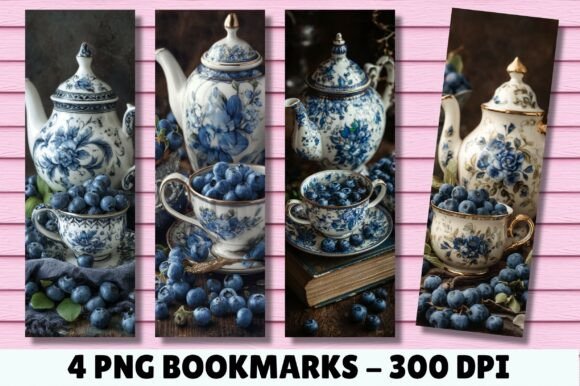
A Teapot and Blueberry Bookmarks Charm for Crafted Projects
When I first opened the Aesthetic Blue Teapot Blueberry Bookmark design files, my immediate thought was, ‘This is a gift.’ Not just a graphic, but a complete little vignette ready to be translated into thread. The mood is gentle, literary, and quietly whimsical. It doesn’t shout; it invites. As a designer who reviews embroidery files for practical application, that’s a promising start. The layout—a charming teapot paired with a cluster of blueberries and elegant script—feels balanced. It’s not overly dense, which tells me it will stitch out cleanly without becoming a heavy, stiff patch on lighter fabrics. The visual personality leans toward cozy, intellectual, and handmade-special, which is a sweet spot for many of my client projects.
The Natural Habitat for This Embroidered Scene
I picture this design living perfectly on items meant for comfort and contemplation. Imagine a custom tote bag for a book lover, a linen pillow cover for a cozy reading nook, or the corner of a cotton tea towel in a kitchen that values quiet moments. Recently, I was preparing a batch of personalized gifts for a small boutique that sells handmade nursery and home decor. The owner wanted items that felt gentle and bespoke. The Aesthetic Blue Teapot Blueberry Bookmark design came to mind immediately for a series of embroidered blanket tags or delicate wall hangings. Its theme resonates with warmth and simple pleasures.
For small business merchandise, like an Etsy shop selling literary-themed goods, this embroidery file could anchor a whole product line. Think embroidered aprons for the bibliophile chef, patches for denim jackets, or even framed hoop art. The ‘bookmark’ size specification (2″ x 6″) is a helpful guide, but in embroidery, we can often scale with care. This design’s 300 DPI resolution in the PNG files means the details are preserved for quality digital previews and mockups, which is crucial for selling the idea before stitching the product.
Where the Design Finds Its Stitching Strength
In real-life embroidery situations, this design’s success hinges on its clarity. The teapot shape is defined, and the blueberries are distinct dots—not a tangled mess of tiny fills. This means on custom apparel like sweatshirts or t-shirts, it will read well from a distance without blurring into a blue blob. On a tote bag, it would become a charming focal point without overwhelming the bag’s utility. For baby clothes or nursery decor, scaled down appropriately, it offers a gentle, non-cluttered motif. As a patch, it would be straightforward to finish because the edges are clear.
The inclusion of script, however, is where practical judgment comes in. Any lettering in an embroidery design requires attention to stitch density and size. On fabrics like textured linen or stretchy cotton for caps, very small script can get lost or become unstable. My advice here is to test the lettering portion first on a scrap of your intended fabric. Check the thread color contrast, especially if you’re moving from the provided blue palette to something else. A satin stitch for the teapot outline might be gorgeous, but you need to ensure your stabilizer choice supports it to prevent puckering.
Careful Application: Navigating Fabric and Scale
This is a design that should be used with thoughtful intention on certain surfaces. On dark fabrics, the lovely blue tones might need a bright underlay or a shift in thread color selection to maintain visibility. On thin or very stretchy fabric, the design’s moderate detail level is manageable, but you must hoop and stabilize meticulously to avoid distortion. For curved surfaces like caps, the long bookmark shape might need adaptation or strategic placement—it’s inherently a more linear layout.
The ‘tiny details’ to watch are the small curves of the teapot handle and the individual blueberries. In a dense fill stitch area, they could merge. In a small hoop size, they might become too minimal. Always, always run a test stitch. This isn’t just about checking the machine embroidery file; it’s about seeing how the design feels as a finished product. Does it look handmade and premium, or rushed and fuzzy? That test directly impacts product value and customer trust.
How This Embroidery Design Elevates Your Project
From a professional standpoint, using a design like the Aesthetic Blue Teapot Blueberry Bookmark affects more than just aesthetics. For a craft business, it offers a coherent theme that can build brand consistency across products—all your literary-themed items carry the same gentle, artistic voice. Its giftability is high; it feels personal and considered, which boosts buyer engagement in an Etsy listing or at a craft fair. It reads as ‘made with care,’ not mass-produced.
For commercial embroidery projects, such as a run of tea towels for a small shop, the design’s clean artwork translates to a reliable, repeatable stitch-out, which is key for professionalism and efficiency. The PNG files being high-quality aids in creating attractive printable mockups for your listings, helping customers visualize the finished product on an apron or pillow cover before they buy.
A Designer’s Practical Notes Before You Hoop
Before you commit this design to a client’s baby blanket or your bestselling tote bag, here’s my routine checklist. First, test it on a scrap of the exact fabric you plan to use, even if it’s just a section. Second, review the stitch density in your machine software—the design’s provided size suggests it’s not overly dense, but confirm for your specific machine and thread weight. Third, inspect how the small details, like the berry stems, look in a black-and-white mockup; this helps judge contrast and clarity separate from color.
Compare how it might look on a light versus a dark fabric background by simulating both. Decide on your stabilizer strategy based on the fabric texture. And crucially, confirm the licensing terms for this digital embroidery file. The product category is Crafts and the type is Graphics, which often implies digital use, but you must verify if your intended use—selling finished items or using it in commercial embroidery—is permitted. Never assume.
Ultimately, the Aesthetic Blue Teapot Blueberry Bookmark design is a lovely, versatile graphic asset. Its strength lies in its evocative theme and clear artwork. With practical testing and thoughtful application, it can become a cherished element on handmade products, personalized gifts, and small shop merchandise. It’s a design that asks you to stitch with intention, and the results, I believe, will reward that care.